
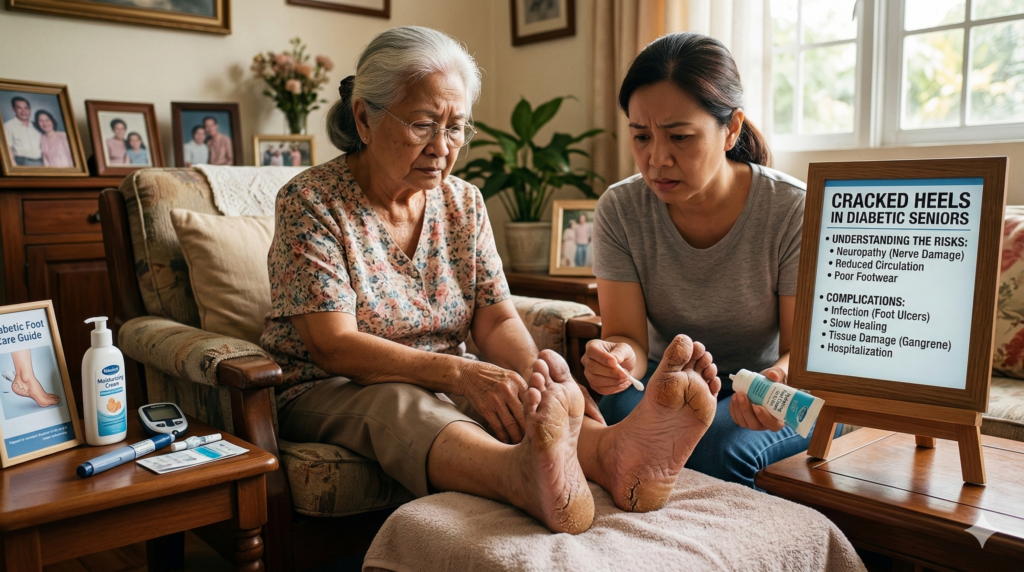
When it comes to diabetes management in older adults, foot health often doesn’t receive the attention it deserves. However, cracked heels in diabetic seniors can transform from a minor cosmetic issue into a serious medical concern that demands immediate attention and consistent care. Understanding the risks and complications associated with this condition is crucial for preventing severe health consequences.
Diabetes affects the body in numerous ways, and the feet become particularly vulnerable as we age. The combination of diabetes and aging creates a perfect storm for foot complications.
Diabetes gradually damages blood vessels, reducing circulation to the extremities. For seniors, this diminished blood flow means that their feet receive less oxygen and fewer nutrients necessary for maintaining healthy skin. Simultaneously, diabetic neuropathy—nerve damage caused by prolonged high blood sugar—reduces sensation in the feet, making it difficult to notice when cracks develop or worsen.
As we age, our skin naturally becomes thinner, drier, and less elastic. When diabetes enters the equation, these changes accelerate dramatically. The skin on the heels loses its ability to retain moisture, leading to dryness, thickening, and eventually cracking.
What begins as dry, cracked skin can quickly escalate into life-threatening conditions for diabetic seniors.
Cracks in the heel create openings in the skin’s protective barrier, allowing bacteria to enter. For individuals with diabetes, the immune system’s ability to fight infections is compromised. A simple crack can develop into cellulitis, abscesses, or even bone infections (osteomyelitis).
Perhaps the most serious complication, diabetic foot ulcers affect approximately 15% of all diabetic patients during their lifetime. Cracked heels serve as entry points where ulcers can form. These open sores are notoriously difficult to heal due to poor circulation and can lead to hospitalization.
Statistics paint a sobering picture: diabetic foot complications account for more than 80,000 amputations annually in the United States alone. Many of these cases begin with seemingly minor issues like cracked heels that progress due to lack of awareness or delayed treatment.
Diabetic seniors and their caregivers should monitor for these critical warning signs:
Any of these symptoms warrants immediate medical attention. The American Diabetes Association provides comprehensive resources at https://example.com for managing diabetic foot health.
Preventing cracked heels is infinitely easier than treating complications. Here are evidence-based strategies every diabetic senior should implement:
Examine feet daily for cracks, cuts, blisters, or any changes. Use a mirror or ask a family member for help checking the heels and soles thoroughly.
Apply a thick, diabetic-friendly foot cream to heels daily, avoiding the areas between toes. Look for products containing urea or lactic acid, which help retain moisture without promoting fungal growth.
Maintaining target blood glucose levels is the foundation of preventing all diabetic complications, including foot problems. Consistent blood sugar control improves circulation and supports skin health.
Schedule regular appointments with a podiatrist who specializes in diabetic foot care. Professional callus removal and preventive treatments can stop problems before they start.
Never walk barefoot, even indoors. Wear properly fitted shoes with cushioned soles and moisture-wicking socks to protect feet and maintain appropriate hydration levels.
Cracked heels in diabetic seniors represent more than a cosmetic concern—they’re a potential gateway to serious, life-altering complications. The good news is that with proper awareness, daily care, and professional support, these risks can be significantly reduced.
If you or a loved one is managing diabetes in your senior years, make foot health a non-negotiable part of your daily routine. The simple act of checking your feet each day and keeping your heels moisturized could prevent complications that might otherwise compromise your independence and quality of life.
Remember, when it comes to diabetic foot health, prevention is always better than treatment. Start protecting your feet today.
Book your first consultation today and experience healthcare that truly understands your needs

Your trusted guide to the best elderly products for safety, comfort, and independence.
Take a Moment to Be Heard — Book Your Listening Session
©2025, ELDEREDGE. All Rights Reserved